
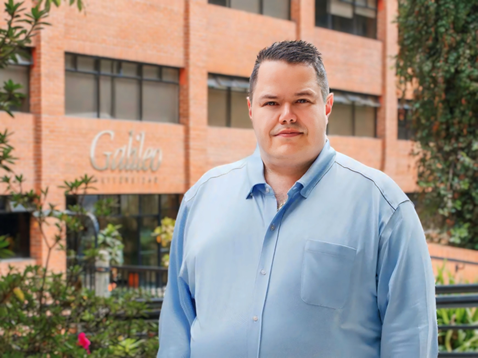
MARTIN VAN DAM, GENERAL MANAGER - COBAN GROUP


TOPIC 1: FOOTWEAR INDUSTRY
1. What is your opinion regarding the footwear industry in Guatemala and what do you think should be done to further develop it in the coming years ?
In Guatemala, footwear manufacturing represents an important source of employment, generating approximately 35,000 jobs annually, and a significant source of income in the national economy, registering growth rates of around 6 percent.
E: There's a clear export opportunity. The Central American market is interesting, with over 50 million inhabitants in the region. Population growth definitely presents opportunities, but a growth rate higher than 6% can be achieved by focusing on exports, and nearshoring can be the driving force behind this growth. Customers in the United States are seeking partnerships or suppliers closer to the US while simultaneously reducing their dependence on Asia.
2. Tell us more about the history of GRUPO COBAN and what do you consider to be their greatest achievements to date?
For over 100 years, Coban has been walking alongside Guatemalans and other Central American communities. In 1955, the first Coban Shoe Store opened in Zone 1 of Guatemala City, near the Central Train Station. In 1958, Hulera Centroamericana was founded, where the company began manufacturing rubber soles and heels to replace leather soles and meet market demand. Grupo Coban has been firmly committed to their growth and is a benchmark for quality and durability in both national and international footwear.
We are the leading employer in the region and we create jobs. The company's growth over time has brought greater prosperity to the department where we work. I believe our greatest achievement is establishing ourselves as a leading company in safety footwear, both in Central America and in the export market. Our foray into exporting began in the 1960s and 70s, but in recent years it has been very strong, and we serve established brands such as Wolverine, Thorogood, and Justin Brands. Our most recent milestone is that this year we will reach 2 million pairs of production, mostly for export. We are the largest footwear exporter in Central America and we continue to create jobs. I would like to add that 65% of our sales are exported, while 35% are in Central America, which includes sales in our Calzado Coban stores. We serve the regional market through business-to-business sales. In our stores, we sell dress shoes, casual shoes, and, of course, a selection of safety footwear to male and female consumers. Guatemalans are very familiar with our Coban and Rhino brands, but what they don't know is the large volume of exports the company produces and that we have 1,600 employees.
3. What distinguishes GRUPO COBAN from other companies in the footwear industry in Guatemala?
E: I think the important thing is that the company strongly believes in human capital, and that's why we provide support to the communities where we operate. We support our employees in education and health. Corporate social responsibility is a pillar of the company, one that has been part of it since its inception. This pillar fosters loyalty, resulting in low staff turnover, a motivated team, and a lasting legacy.
There are different generations who work, grandfather, father and son, until they retire from the company.
We support education with two schools in San Cristóbal Verapaz. The company has contributed through donations such as land for expansions and specialized equipment to provide better medical care. We also have a nutrition and health monitoring program for young children in the region. Grupo Coban is a family business whose values are lived out every day. We believe in supporting our employees and contributing to their professional development. This is a philosophy that permeates all of the group's operations.
4. What is your vision for GRUPO COBAN in the next 5 years?
E: When we talk about stores, the vision is definitely to double our number to reach at least 40 stores within three years. We already have several openings planned as part of our growth strategy. As a manufacturer, our vision is to grow to over 3 million pairs, primarily serving export clients. Next year, we're launching a new line of safety footwear with polyurethane soles, both for export and the Central American market. We have several innovation programs underway for rubber products. We're also investing in a new wastewater treatment plant for the tannery to ensure we're always ahead of the curve in terms of regulatory compliance. We want to anticipate what's coming and do it better.
5. What do you consider to be your main contribution to the development of the sector and the country in general? Do you have CSR (Corporate Social Responsibility) programs?
Grupo Coban offers altruistic services to Guatemalan society through the “Fundación Miguel Torrebiarte,” a non-profit organization that seeks to contribute to community development in various communities throughout Guatemala. The goal is to strengthen teachers' skills to ensure children receive a better quality education through learning spaces with resources, tools, and both in-person and digital platforms that foster innovation and excellence in learning.
TOPIC 2. BILATERAL RELATIONSHIP WITH SPAIN
7. What is the relevance of Spain to Grupo Coban? How open is Spain to obtaining strategies for Guatemala? Would they be open to creating alliances with Spain?
Grupo Cobán took advantage of the establishment of the Central American Common Market and began exporting to various countries in the Isthmus, along with the Dominican Republic and the United States, in 1963. In 1985, the Rhino™ brand was registered, becoming a national and international benchmark for high-quality work footwear. Furthermore, we are aware of their strong partnership, in which they have been manufacturing footwear for the Spanish company Iturri since 2016.
E: This relationship began in 2016. Through our company ITURRI, we served several clients in Europe, including the Spanish company, primarily focused on safety boots. It was a very successful, multi-year project. Then, due to our growth in the United States and its proximity, our priorities shifted somewhat. Now, with the project I mentioned earlier to strengthen our polyurethane-soled safety footwear with greater capacity, it could be another opportunity to serve the European market. Spain is important, but more so today as a supplier of expertise, machinery, and raw materials. We work with several companies in Spain, for example, on the purchase of footwear machinery. In Spain, the Elche and Alicante regions are well-known for their footwear industry. There are several suppliers in this region that provide us with industry supplies. We also participate in an innovation initiative with a Spanish leather supplier, which involves extracting proteins from processed hides for the food industry. So, yes, Spain is definitely a very important country for us. Regarding exports, I do believe there's another opportunity. There's a free trade agreement, and conditions are favorable now that we're investing in capacity. There's another opportunity here.
8. Before we move on to the last question, we would like to know more about your personal and professional background. How did you become the Manager of GRUPO COBAN?
MARTÍN VAN DAM; General Manager and CEO of Grupo Coban: With experience also in companies such as ADOC, Industrias La Constancia, Grupo Progreso Costa Rica, and Aeroman. He has a strong skill set that includes business strategy, change management, leadership, strategic planning, and negotiation.
E: I was always looking for adventure outside of the Netherlands, where everything is well-defined with clear rules and everyone acts, more or less, the same way—I'm exaggerating. I found adventure in Latin America with a Dutch company that gave me the opportunity to come to the region. In El Salvador, I met my wife, and this is the main reason why, as a family, we're still here in Central America. I was in El Salvador working for a multinational beverage company, and to stay in the region, I looked for opportunities there. I found them at Aeroman and Adoc, and I also spent some time in Costa Rica. At Adoc, the footwear experience was very interesting for Grupo Cobán. We started talking, and when everything was ready to begin, the pandemic hit, but in July 2020, I formally started at Grupo Cobán. So, it's been four years as general manager. It was a win-win because I see the opportunity the group has, and well, in four years we tripled our size, so we're happy.
9. What are your final comments about Guatemala and its enormous potential, and what would you like to share with the influential readers of the newspaper EL ECONOMISTA?
E: Guatemala is a country with a unique cultural heritage and natural beauty. I truly invite visionaries who know how to harness the growth potential the country offers to build growth and prosperity for the entire population. This is my message.


Comments