
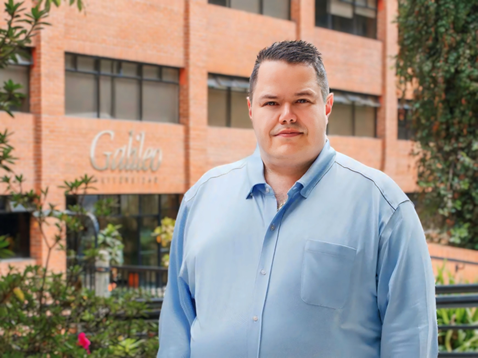
LUIS LARA - CEO BANCO INDUSTRIAL - GUATEMALA


1. What is your opinion, Mr. Luis Lara, regarding the financial sector in Guatemala, and what do you think should be done to further strengthen it in the coming years?
Thank you very much, it's an honor. I believe a very relevant point is the country's economic stability because, ultimately, the financial system depends on the economy. Guatemala is a country with a debt level of 27% of GDP, very low, a fiscal deficit that usually hovers around 2%, an exchange rate that, despite being allowed to fluctuate, hasn't undergone any significant changes in the last 25 years, and very low interest rates. For example, today the interest rate in dollars in Quetzales is almost the same; a business can obtain credit at rates of around 7%, which is very low compared to the region, but of course, that's good for the country because it helps the productive sector develop. Guatemala is an extremely resilient country, as we've seen in recent crises, where practically nothing has happened in Guatemala. For example, during the financial crisis of 2008, while the world experienced a decline, Guatemala had positive growth. In 2015, the president and vice president of Guatemala were removed from office due to corruption issues, and yet the country still grew by 4.1%. With COVID, we only decreased by 1.8%, but the following year, in the first quarter, we had already recovered to our pre-pandemic size. This demonstrates the country's resilience. So, you might ask, "What is this due to?" I attribute it primarily to the fact that 92% of GDP is generated by the private sector. So, whatever happens, the private sector is working. The main companies in Guatemala were not sold, and I hope they will not be. Instead, they will remain in the hands of Guatemalans, allowing for a continuous reinvestment of resources in the country. So, as banks—because in Guatemala we have 19 banking institutions—we operate within that environment, and that allows the system to be solid, to have constant growth that normally, for example, when we look at assets and loans, hovers between 9 and 10%, which is a very reasonable figure, with a return on equity of around 17%. So, I would say that financially, the banking sector in Guatemala is very good, very solid. If I have to project for the future, I also see very good years ahead. I don't see why the current situation is going to change. The economic growth that is projected for this year is 4.1%, and for next year it is exactly the same; that same figure is also projected. Perhaps I would say that one problem we have is the issue of infrastructure, because if the country had better roads and better ports, we could grow at levels of 6%. However, I believe these are issues that are already being resolved. There is a significant investment in a highway project in the interior of the country, of which we as a group are a part. There is also a bypass, work is underway on another one, and there are various other projects that I believe will help. But it is something we need to try to accelerate, and this is something we are working on with the government. Because ultimately, although I would prefer all investments to be private, government support is necessary, for example, for daytime tolls and other issues that are needed for the project. So the banking sector is operating in that environment. We have prudential regulations, that is, a banking law and regulations, and also top-level authorities who, while providing assistance when necessary, also enforce requirements when necessary. I think this has allowed the system to develop well, and I see it as very positive. We are also very accustomed to competing with foreign banks. As the largest bank, focused heavily on the business sector, we continually compete with large foreign banks, and there is no withholding tax here. We compete directly, and we have done very well. I think the challenge is even greater financial inclusion. Although Guatemala has a very good network of branches—we alone have around 660 branches, which is quite a lot compared to other banks in the region—if we look at the level of financial inclusion, it all depends on the indicator used, but the percentage of accounts relative to the economically active population is around 60%. So what I think is that it's just a matter of time before we're fully banked, and we're advancing rapidly; the cell phone issue and everything else helps a lot.
2. Tell us more about the history of Banco Industrial, Mr. Luis Lara. What do you consider to be the greatest achievements, awards, and recognitions you have received to date?
It began in 1968, founded by the main industrialists in Guatemala, hence the name Banco Industrial, and initially it served the large corporate sector; however, nowadays we are also very active in the area of SMEs and also in the area of individuals, that is, there are three managements, one that looks at the business and regional sector, another that looks at the area of SMEs and another that looks at individuals.
I believe that one of our main achievements, reaching a market share of nearly 30%, is a very important step. Also, the fact that young people see us as a bank, and that both young people and adults see us as an approachable bank, a very technological bank, despite having 660 branches, as I mentioned, is very gratifying. What makes us very happy is that around 85% of the bank's transactions are carried out without human intervention; that is, only 15% are done in branches. This shows that all the applications and services we provide are highly valued by all our customers.
Another important achievement is that we are the largest bank in the region. By region, I mean from Guatemala to Panama, including the Dominican Republic. We continue with a strategy of expansion and growth. By expansion, I mean coverage in other countries, and by growth, obviously, in assets, loans, profits, etc. We have a very large social responsibility area, the BI Foundation. Through the Foundation, we are heavily supporting entrepreneurship. This year, the number of entrepreneurs we have supported is around 10,000. We also have an innovation and entrepreneurship center where people can come, receive mentoring, and access various types of machinery, such as looms and kitchen equipment. We have a range of business opportunities that are commonly available to Guatemalans.
Guatemalans are incredibly entrepreneurial, and I think that's a great strength we have. They're also very hardworking, so we're very pleased with everything that's being done in that area. And well, thank God the achievements are significant, but I think perhaps the most important thing is that the internal relationships within the bank—the relationships with the shareholders, the board of directors, and among all the employees—are very positive and excellent. This undoubtedly creates a very conducive work environment. We're also working extensively with agile teams; we have just over 60 cross-functional teams, which allows us to launch products much faster and with greater cross-functionality.
3. What is your vision for Banco Industrial in the next 5 years?
Look, our vision is to grow. I mean, for example, a bank's margins usually shrink, and administrative expenses increase. So a bank is an entity that must grow, it must grow. So I would say that our primary objective is to grow. Everything else—how to grow, whether with technology, whether we open more branches, whether we open a bank in another country—all of that is secondary to the primary objective. But we would like to, perhaps, what's it called, we have a couple of countries, in one where we already have a presence, grow a little more, and in another where we don't, establish ourselves. So those are things we are looking at.
TOPIC 2. BILATERAL RELATIONSHIP WITH THE UNITED STATES
4. How relevant is the United States to Banco Industrial? Would they be willing to form more strategic alliances for the company?
We're not neighbors; Mexico is in between us. But we're an unconditional ally of the United States. We highly value the relationship. Guatemala is one of the very few countries that recognizes Taiwan. We don't have a relationship with China, despite all the pressure, so I think that's an important indication of how we view the United States. Of course, we have very close ties with banks. We have a correspondent banking network that's by far the largest in the country, and we're certainly open to any alliances we might have with different entities for financial matters or payments. Remittances are very important, coming from very hardworking people. I think what we in Guatemala should do is try to prevent people from looking elsewhere, and to do that, we have to give them opportunities in Guatemala.
In Guatemala, unemployment is practically zero. What does happen is that there is a huge wage gap, and that's what makes people look at things and makes it very difficult to stop. But we are very open to anything we can do, and we greatly admire the United States; after all, the United States represents 26% of the world's GDP.
5. Before we move on to the last question, we would like to know more about your personal and professional background, Mr. Lara.
Well, I was born in 1965, so I turned 60, but I feel like I'm 20. I'm an industrial mechanical engineer, I have a master's degree in business administration, I've been working at the Bank for almost 33 years, I started in the projects area, then I worked in the brokerage firm, then as assistant to the general manager, in '98 I took over the management of the bank and on January 1, 2020, the general management and CEO of the group.
Well, I like to play sports, I think the secret to success is having a great team, people who are better than you, like, ah, that's extraordinary.
So that's very relevant, understanding that one won't be around forever, but on the contrary, to have better people. I really like technology, I mean, really, maybe because of my engineering background, I mean, for me technology is fundamental, so I try to understand all the trends as much as I can, keep the institution updated, and the truth is I really enjoy the work.
Well, I've also been president of the Banking Association, about five times. I've also been a director of the Central Bank for about 18 years, which is the Monetary Board, where the banks elect a principal director and an alternate, and I've been a director of the Central Bank for about 18 years.


Comments