
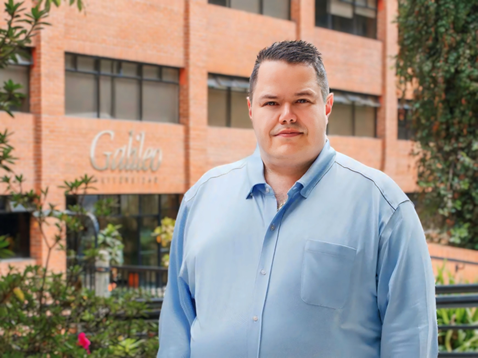
JAVIER GIMÉNEZ - MINISTER OF INDUSTRY AND COMMERCE


TOPIC 1: INDUSTRY AND COMMERCE
1. What is your opinion, Mr. Minister, regarding these sectors of the country, and what is your plan and strategy for further developing them in the coming years?
First, we must understand that we need to maintain the macroeconomic variables that have brought us to where we are today. Paraguay is, first and foremost, a very competitive country in terms of taxes, and this will continue because the President of the Republic envisions that the country must remain competitive in this area, with a simple tax system and streamlined procedures.
We are pleased because yesterday we received important news: the Adam Smith Center at the University of Florida recognized Paraguay as the least bureaucratic country in Latin America. This is concrete proof that progress is being made in simplifying procedures. And behind this strategy lies a key principle: respect for the private sector. We firmly believe that it is the private sector that must grow and flourish in Paraguay.
So, what are the pillars? Competitive taxes, simplified procedures, and two additional highly relevant aspects: logistics infrastructure and energy.
Paraguay, as a landlocked country, needs a more developed logistics infrastructure. We face the same challenges as Bolivia. For the economy to grow, we must work on the competitiveness of industry, and a large part of that competitiveness depends on logistics. That is why the government has invested heavily in the waterway—which is key, since 90% of our exports and imports are transported through it—and will continue to do so.
The other major project underway is the Bioceanic Route, which will be a significant milestone, as it crosses the heart of the Paraguayan Chaco. The Chaco represents 60% of the national territory and is where we envision double-digit GDP growth. It is a region with enormous, still largely unexplored resources. It not only has livestock, which drives our meat exports, but also agricultural, agro-industrial, and mining potential, including gas and important minerals that are not yet being exploited on a large scale. Infrastructure development is the first step to unlocking that potential.
The third strategic pillar is energy. Paraguay continues to export millions of kilowatts per year, but that's not something to be proud of. Rather, it reflects that we are not using that energy domestically to boost industry. We have one of the best energy mixes in the world—99% clean and renewable—and the global context is precisely what we need. But we continue to export a large portion of that energy.
This creates a paradox: we have the best energy, but we don't use it to foster our industry. That's why, at the Ministry of Industry and Commerce, we are working with other institutions to reverse this situation. A clear example of where we want to go is data centers. In a world driven by artificial intelligence, which requires significant energy capacity, Paraguay has a unique opportunity. We are creating the conditions to attract investment in this sector, so that companies can establish themselves here and take advantage of our energy, instead of continuing to export it to neighboring countries.
The other sector we are heavily investing in is the maquila industry. In the second point, we mentioned Paraguay's competitive tax system, but in addition to that, we have special regimes such as Law 6090 (the Maquila Law), the raw material import regime, and free trade zones. All these schemes contribute to consolidating Paraguay's vision as a regional manufacturing hub.
The numbers speak for themselves—as you mentioned—: Paraguay currently exports almost US$1.2 billion in manufactured goods under the maquila regime. This is possible thanks to two major advantages: our geographic location and our proximity to Brazil, the world's eighth-largest economy, with immense and diverse demand.
We are promoting an import substitution model at the regional level, seeking to capture some of the market share currently dominated by Asian industry. Brazil imports billions of dollars' worth of products from Asia, and Paraguay is gradually beginning to occupy a portion of that market due to our proximity, competitive costs, and constantly improving infrastructure—for example, the construction of a second bridge with Brazil.
Furthermore, we have a young and competitive workforce. Let me give you a concrete example: the global textile industry is migrating towards the fast fashion model, where the essential thing is to get products onto store shelves quickly. When an import from Asia takes 60 days to reach Brazil, Paraguay can do the same in just 48 hours by land. In this way, we are replacing those imports, generating an interesting value chain.
Paraguay imports the fabric from Brazil, transforms it into garments with a The industry is still labor-intensive—that is, not automated—and then re-exports to Brazil. We are taking advantage of the competitive tax regime, our energy resources, our young workforce, and our geographic advantage.
2. Mr. Minister, what is your vision for such an important institution as the Ministry of Industry and Commerce?
The Ministry is very cross-cutting. Unlike others, such as Health, Education, or Public Works, we don't execute large budgets or projects, but we have a key role in articulating and coordinating with other ministries to promote different sectors. One example is the program you mentioned, Zero Hunger.
We have identified that the largest buyer in Paraguay is the State itself, and this can become a powerful tool for revitalizing neglected sectors, such as SMEs. Unfortunately, in Paraguay—as in Bolivia, Argentina, and other countries in the region—informality remains one of the main problems. Today, between 50% and 60% of the economy is still informal, and most of that informality is in the hands of SMEs.
At the Ministry of Industry and Commerce, we are working to bring these SMEs out of the informal sector. How? Through incentives such as access to credit. But to access credit, they must first formalize their businesses. And to formalize, we return to the issue of simplifying procedures.
We created a special legal structure, the Simplified Stock Companies (EAS), which allows an SMEs to be incorporated with just a few clicks, without having to go from ministry to ministry looking for stamps, signatures, and paperwork. Today, a person can open their company in less than four days. Before, if an SMEs from the interior of the country or the greater Asunción metropolitan area wanted to complete these procedures, they had to come to the city center, and that often meant they didn't even bother.
With these measures, the results have been very positive: this administration has already created more than 10,000 new businesses. That means 10,000 entrepreneurs who have moved from the informal sector to established companies and can now leverage two fundamental pillars for growth: access to credit and access to the market.
How does access to credit work? An informal micro, small, or medium-sized enterprise (MSME) cannot access competitive rates from a bank. In contrast, once formalized, it can receive rates of 10% or 12% annually. This contrasts sharply with informal loans, where daily rates of 2% are paid, equivalent to 60% monthly or up to 600% annually. Formalization is the first key step to accessing sound financing.
Next comes access to the market. Programs like Zero Hunger require the companies awarded funding to purchase at least 10% of their inputs from MSMEs. But often they can't do so because they can't find formal MSMEs to sell to. So, when you manage to formalize them, provide access to credit, and open up market access, the virtuous cycle is complete.
Now, these winning companies are required to buy some of the school lunch products—like vegetables, greens, or juices—from MSMEs. This allows them to grow, because what makes a company grow is revenue, having customers. And the biggest customer is right here: the government. What's missing is building that bridge.
Finally, to complete the MSME development cycle, there's training. Many companies in Latin America don't manage to survive more than three or four years. Few manage to grow because sometimes they become victims of their own success. For example, a micro-entrepreneur might start by selling artisanal ice cream in their neighborhood and do very well. But when the business grows and needs to open a storefront, hire people, and scale production, they begin to face new challenges.
And at that point, having a good product is no longer enough; you need to be an entrepreneur. Some have that innate talent, but being an entrepreneur is also a career: you have to learn accounting, human resources, leadership, and marketing. That's why business administration degrees exist. If we give SMEs the necessary tools and training, they will be able to overcome that barrier and continue growing.
TOPIC 2. BILATERAL RELATIONSHIP WITH THE UNITED STATES
3. What is the relevance of the United States-Paraguay relationship in obtaining more strategic alliances and thus continuing investment in the country, and are you open to creating new US-Paraguay alliances?
E: First of all, there is genuine admiration and affection for the American people. The topics we are discussing—such as the private sector, freedom, and respect for private property—are deeply American values, present since its independence. These are principles that the United States has defended and taught to the world, and that is why there is a sincere appreciation for that legacy.
Regarding investments in Paraguay, the United States It is the second largest investor in our country, after Brazil. It has a strong presence, especially in the agribusiness sector, with US companies that have made multimillion-dollar investments in grain processing. They also have a significant presence on the waterway, transporting many of the products mentioned earlier. Furthermore, there are American companies that import products from the United States, generating vibrant trade between the two countries.
One relationship that is growing increasingly is that of digital commerce, which disintermediates the traditional supply chain and allows for direct connections. For example, an artisan producer from Areguá can sell to a woman in Los Angeles through e-commerce. That person in the United States accesses a website, chooses a Paraguayan craft, makes a couple of clicks, and the product arrives by mail. This generates a new dynamism, a form of commerce that complements the traditional one.
And we are not only talking about artisanal products, but also major sectors, such as meat. This is an important topic and a cause for celebration because it is one of our main export emblems. Having entered the United States market and been approved by the USDA—the equivalent of its Department of Agriculture—means much more than economic value: it's a seal of quality. When the world's most demanding market approves you to feed its population, it's a kind of passport that opens doors to other markets.
This endorsement fills us with pride. Beyond the numbers, it's recognition of the quality of work done by our meatpacking plants, which are large companies that have made a constant effort and receive government support. But we also want to emphasize that this isn't exclusive to large companies; what we mentioned earlier about micro-entrepreneurs is also part of the picture.
In short, there's a wide range of opportunities in trade with the United States, from an artisan in Areguá exporting to a buyer in Los Angeles, to Paraguayan meatpacking plants exporting meat to the world's most demanding market. This spectrum reflects the potential that exists when tradition, quality, technology, and openness are combined.
4. Before we move on to the last question, we'd like to learn more about your personal and professional background and how you came to be Minister of Industry and Commerce.
E: I'm turning 50 this year. I've spent my entire professional life in the private sector, and this is my first experience in government. My connection to the public sector has been, until now, through my involvement in trade associations: I was president of several, some related to industry and others to logistics.
My appointment as Minister of Industry and Commerce reflects President Santiago Peña's vision of bringing public administration closer to the needs of the private sector. He often tells an anecdote: when I was involved in trade associations, I was constantly telling him, "Mr. President, we have to do this, we have to do that." And one day, after he was President of the Republic, he said to me, "Do you remember all those things you told me needed to be done? Well, come over here and do them yourself." It's a simple, yet very graphic way to illustrate where I come from and why I'm in this role today.
I'm a father of four and have been married for 25 years. I studied at the American School, I speak English fluently, but beyond the language, I have a deep understanding of American culture. I'm passionate about U.S. history and very interested in understanding the roots of its success as a nation. I believe that much of that success lies in values that transcend generations.
My two daughters are currently studying in the United States, pursuing their careers in Boston. And I, personally, am deeply in love with Paraguay. My desire is to leave a legacy from the Ministry: to drive real transformations and strengthen institutions so they better serve the private sector, functioning more efficiently and with greater accessibility.
I fully share the President's vision of transforming Paraguay into an industrial nation. We must move beyond being seen solely as exporters of raw materials—as is the case with energy—and develop a robust and prioritized industrial agenda. That is my aspiration: a Paraguay that produces, that transforms, that generates added value and opportunities for its people.
5. Final message for the Los Angeles Times readers who will see the report on Paraguay when it is published: why should they come to invest or learn more?
E: My final message for the Los Angeles Times readers is simple: come and discover Paraguay. Here you will find a country full of opportunities, with a young population—perhaps the youngest in the world, with an average age of 26 years old—, incredibly hospitable people, lush nature, and a country that won't disappoint.
We often say that those who visit Paraguay cry twice: the first time, when they arrive and have an initial impression different from what they expected; and the second, much more intensely, when they leave and must depart from this blessed land.


Comments