
HÉCTOR LEAL - CEO GRUPO CAYALÁ


INFRASTRUCTURE AND REAL ESTATE
1. What is your opinion, Mr. Leal, regarding the infrastructure and real estate sector in Guatemala, and what do you think should be done to further develop it in the coming years?
E: From Cayalá, we've seen the need for better urban planning in Guatemala City. There are many developers building residential, commercial, and office buildings in different areas of the capital. However, we need better planning regarding plazas, social areas for the community, and everything related to mass transit within Guatemala City. The traffic I'm told about is getting worse every day; it's very difficult to get from one end of the city to the other. This is all due to a lack of planning, since mass transit planning is being prioritized over all these developments. So, I believe that Guatemala City has great potential to continue growing, diversifying, and having incredible areas within the city.
2. Tell us more about the history of Grupo CAYALÁ and what do you consider to be its greatest achievements to date?
E: In 1913, the first plot of land in Cayalá was acquired, surrounded by abundant natural beauty. In 1983, the first real estate project, Jacarandas de Cayalá, was launched, featuring the first homes in the area. In 2003, the master plan for Ciudad Cayalá was developed, bringing together 25 architects led by León Krier, the father of neo-urbanism. And in 2011, the commercial area was inaugurated with Cardales de Cayalá and the first phase of Paseo Cayalá, the heart of Ciudad Cayalá. So, against the advice of many, we launched the first phase, and the truth is that from 2011 to the present, we haven't stopped growing; we haven't stopped building. We are always monitoring the market, always identifying its needs in order to launch the necessary product. Initially, we focused on serving what we might call the city's most exclusive market, and we've been developing new housing options to attract and cater to different segments of the population. This has been a challenge for us because it means maintaining quality across diverse segments, and what we're most proud of is being able to offer a quality life to different segments, not just to the very top of the market or the segment we initially served. So, this has truly been a challenge, one we've addressed from the beginning, and as I mentioned, we haven't stopped growing and building. Today, we have plans for hotels and more housing. It's truly satisfying to be able to give many more people the opportunity to live in a city like Cayalá. From the beginning, we also set out to create a model city. A model city is one in which we create suitable spaces to integrate the community, and the community is all of us, not just a market segment. So, for us, it was extremely important to create these spaces where we can integrate as Guatemalans, but above all, also grow sustainably. That's why we've dedicated a lot of effort to sustainability, to different sustainability activities, and also to activities where we work with communities around Cayalá.
3. Mr. Leal, what distinguishes you from other companies in the Guatemalan infrastructure and real estate sector?
CAYALÁ is a very complete place that has 33,000 square meters of offices, more than 1900 homes, 260 shops, 3,600 parks, 36 restaurants, 12 academies and gyms, 7 movie theaters, 7 banks, 4 medical care centers and 1 United States embassy.
Without a doubt, Ciudad Cayalá is one of the country's most upscale and innovative developments, boasting a prime location. It has become one of the most popular destinations for visitors to the capital, who come to explore, dine, or simply enjoy quality time with family and friends. What sets us apart is our completely open environment. Post-pandemic, people and the market have sought out open spaces, not enclosed areas where contamination or pandemic-related issues might arise. Open spaces are safer for everyone's health. This provides investors and prospective buyers—whether purchasing offices or residential properties—with a sense of security, allowing them to understand the future growth and what their neighborhood will offer. I believe this has been a major factor in our success: our ability to plan ahead and offer residents a high quality of life, and, of course, an unforgettable experience for our visitors.
4. Mr. Leal, what do you consider to be your main contribution to the development of the sector and the country in general? Do you have CSR (Corporate Social Responsibility) programs?
E: What we envision is developing a model city. The programs you mentioned are, obviously, purely environmental. We are currently working in partnership with a university in Switzerland, along with the University of the Valley of Guatemala, to set up a laboratory and further improve our treatment plants. What we envision, let's call it that, is having life beyond the treatment plants. What do I mean by that? The wastewater arrives, we treat it, and after the treatment plant, we could be able to raise fish.
TOPIC 2. BILATERAL RELATIONSHIP WITH SPAIN
5. In your opinion, what are some of the main investment opportunities and new markets in Cayalá that you would like to highlight for potential investors from Spain?
E: Guatemala's opportunities are enormous. The most popular trend today is nearshoring, the ability to produce close to large markets. We have that geographical advantage that we must be able to exploit. Guatemalans, in general, I think are very hardworking and very creative people. I believe that's another way to exploit, let's say, to take advantage of all these economic opportunities of nearshoring. For Spain, obviously, it's extremely important for us because today we have the AC Hotel, which is now a Marriott, but the AC brand was born in Spain. It's a hotel that was designed precisely for urban areas, and that was our first hotel here in Cayalá to demonstrate, or to emphasize, that Cayalá is an urban area.
6. Before we move on to the last question, we would like to know more about your personal and professional background and how you became CEO of Grupo CAYALÁ today?
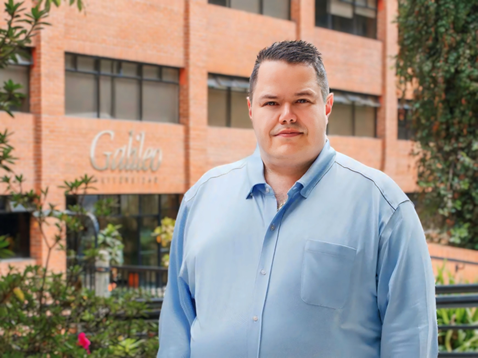
HÉCTOR LEAL – CEO
E: As many said, maybe I was crazy to start Cayalá. The truth is, I'm a Civil Engineer by training, but I grew up in the countryside, on coffee farms and cattle ranches. I was born in Guatemala; my parents are from Antigua, but my grandmothers were very much from the countryside. My paternal grandmother was a big supporter of the Scouts, as was my father. So, I was born into a culture where service to others was valued, along with a deep respect for the land and a strong emphasis on planning. In fact, when I graduated from university—I studied in the United States—the first thing I did was go work in the countryside. I went to set up a cattle operation in Nicaragua, which eventually became the largest cattle operation in the country. I've always been passionate about the countryside, about respecting the land. I think that's what has helped me with what I do here in Cayalá today, which involves a lot of planning, but also a strong commitment to sustainability. We are developing, we are building, but we can also do it sustainably, in a way that ensures the future of the city. That's what I'm passionate about. I studied Civil Engineering and specialized in water management. That's why, as I mentioned, I'm passionate about water treatment plants and making extra efforts to conserve and better manage our aquifers. Here in Cayalá, we are part of FUNCAGUA, a foundation for water conservation in the metropolitan region of Guatemala. We joined FUNCAGUA for the same reason: where there is water, there is life. So, all of this is part of what has captivated me from the beginning, part of what I inherited from my father and my grandmothers. I hope to continue doing this well.
7. Final message, for the readers of El Economista who will see the report on Guatemala when it is published, why should they come to invest or learn more?
E: To all investors, to those seeking business opportunities, I believe Guatemala is the ideal country to do so. It has the largest economy in all of Central America. I invite you to visit Guatemala, I invite you to visit Ciudad Cayalá and see firsthand the true wealth of this country, and realize firsthand that there are many opportunities for investment and a good life here. So, welcome to Guatemala, welcome to Ciudad Cayalá, and rest assured that we will continue to develop the country as it should be.


Comments