
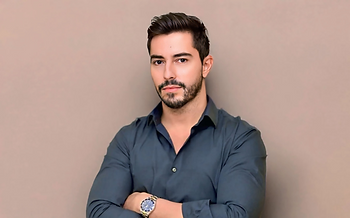
CESAR REVENGA - CEO NEXTIL GROUP

TOPIC 1: TEXTILES
What is your opinion regarding the textile industry in Guatemala, and what do you think should be done to further develop it in the coming years ?
E1: Guatemala is a privileged country because the textile industry is modular; companies offer services to individually industrialize products by process, so all companies can collaborate within themselves and offer the customer a wide range of products.
NEXTIL's project in Guatemala aims to project an image of the country as a producer of high-quality fabrics and as an integrating company that generates quality employment; almost all of NEXTIL's top management positions in Guatemala are held by Guatemalans with extensive experience.
Tell us more about NEXTIL's history and what you consider to be its greatest achievements to date?
E2: NEXTIL is a traditional Spanish textile company that originated from the idea of a Catalan family of textile manufacturers. It began as a local company and gradually expanded and internationalized, especially after 2000. The group experienced severe financial difficulties between 2009 and 2014. Starting in 2014, it restarted with a new team, and in 2023, it underwent a complete transformation with a new board, a new non-executive Chairman, new investors, a new project, and a new management team, of which we are a part. Our vision is to create a group that is involved in various stages of the textile process, excluding the spinning stage. In Guatemala, the business specializes in weaving; in Portugal, we have a garment factory for luxury retail; and finally, we also have our own patented brand of natural and eco-sustainable dyes, which we are beginning to market to major, well-known retail brands.
The NEXTIL Group achieves production excellence in each of its three lines of business: weaving, dyeing, and garment manufacturing. We have leading clients in the sector. In our Guatemalan business, we produce premium elastic fabrics for top brands in athleisure, intimate apparel, swimwear, and medical applications. For example, we manufacture fabrics used for post-surgical compression bandages. We are the only company in Central America that produces this high-quality, cutting-edge fabric, which is technically complex to manufacture. This is the Group's vision and its differentiating factor.
What distinguishes them from other companies in this sector in Guatemala?
E: In our eco-friendly dyeing line, over 50% of the pigment is natural, extracted directly from nature, and contains no chemical components. Furthermore, the most important aspect of the process is that we dye garments and fabrics using water at room temperature; we don't need to heat it. Considering that in a conventional dyeing process, over 30% of the costs are energy consumption, and that we save more than 80-85% of the energy in our process, our eco-sustainable dyeing brand, Greendyes, is also efficient. We also achieve significant savings in water consumption (90% compared to conventional dyeing), and the water generated by the dyeing process passes through sand filters and can be used for irrigation. The philosophy we bring to Guatemala is precisely that: innovation and sustainability.
What do you consider to be your main contribution to the development of the sector and the country in general? Do you have CSR (Corporate Social Responsibility) programs?
E: We help Guatemala become an exporter of premium elastic fabrics. Most of the country's textile industry produces fabrics for mid- to low-end markets, and we bring a textile process that focuses on premium quality and serves sectors like the medical field, for which we manufacture specialized fabrics. As a publicly traded company, we contribute to corporate social responsibility and foster innovative and sustainable growth.
What is your vision for NEXTIL in the next 5 years?
E1: NEXTIL is already a benchmark for premium stretch fabric. The textile industry in Guatemala is mature, but it's limited to a product range that goes up to mid-range value, and ours is in the high-end range. We're going to influence the industry's technological advancements and make it even more value-added. There are garment factories in Guatemala that didn't produce this type of product because they didn't have a supplier of the fabric. Now there will be fabric available for them, and they'll have the confidence to come and invest.
TOPIC 2. BILATERAL RELATIONSHIP WITH SPAIN
What is Spain's relevance to NEXTIL? Would they be willing to create strategic alliances?
E2: For us, Spain is the country where Nextil's publicly traded parent company is based, and that will continue to be the case. The Nextil group intends to make its business line in Guatemala the core of the group, the business line with the highest revenue and the fastest expansion. The reasons are obvious: the roots between Spain and Guatemala go back to our ancestors; we speak the same language, we have very similar customs, and historical ties that we must continue to cultivate.
We want to be driving forces in the Guatemalan textile industry; we want to be a benchmark that pulls others along so that the country continues to develop. Deep down, we are all the same; we live in different parts of the world, but our mother, our cultural roots, are the same.
Before we move on to the last question, we would like to learn more about your personal and professional background.
E2: I have a law degree, I'm 41 years old , and since graduating I've practiced law, always closely linked to the business world and multinational corporations. When I was 33, a large Spanish publicly traded company invited me to join its board, and from that moment on, I began a career more focused on management and less on the legal side, which I gradually moved away from. This is my third experience as the CEO of a publicly traded multinational. In March 2024, I joined the NEXTIL project, offered to me by its new shareholders, in the context of a change in board and management. That's the foundation of this new impetus we've given to the Group in general and, in particular, to our operations in Guatemala.
I am a person who likes to learn from people who know their industry and who have extensive experience in the businesses they manage.
Final message for the readers of El Economista who will see the report on Guatemala when it is published: why should they come to invest or learn more about it?
E2: I would highlight two aspects:
First, the great development opportunity that the region still has.
For developing a business in a particular part of the world to be a truly worthwhile opportunity, we must first consider whether there is significant untapped potential in specific sectors. This is the case in Guatemala, within the new context of nearshoring, the CAFTA agreement, and the shift of Asian production to Central America, driven by American clients themselves.
The second is the character of the people and the idiosyncrasies of the country itself, the desire to progress, the will to develop. When you combine these factors—a place with enormous potential because there is still so much to be done, and people who want to make things happen and are open to foreign investment—you get the right mix.
Therefore, and from my point of view, as an executive of a Spanish company, I invite Spanish and European companies in our region to invest in Guatemala because, certainly in the textile sector, there are very few countries in the world that can represent an investment with better projection and prospects than the one we have made here.


Comments